
A company can look profitable on paper and still run out of money. That’s the reason the cash flow statement exists. If you’ve ever wondered what a cash flow statement is and why accountants and investors care so much about it, this guide explains it in simple terms, with an example you can follow.
What Is a Cash Flow Statement?
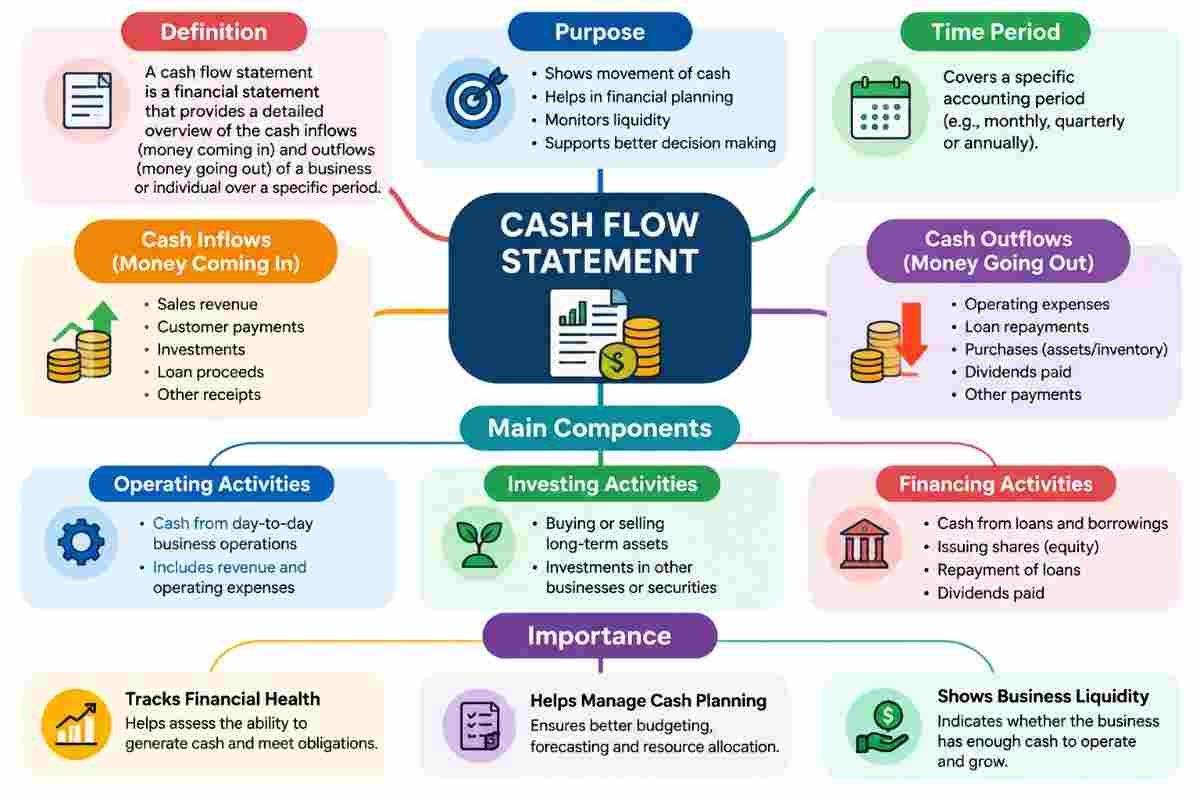
A cash flow statement is a financial report that shows how cash moves in and out of a business over a period, such as a month, quarter, or year. It starts with the cash the company had at the beginning of the period and ends with what it has at the close.
Unlike the income statement, which records revenue when you earn it, the cash flow statement tracks real money. If a customer buys on credit in December but pays in February, the sale appears in December’s income statement and in February’s cash flow statement.
It’s one of the three core financial statements, alongside the balance sheet and the income statement.
Why It Matters
Profit is an opinion shaped by accounting rules. Cash is a fact. A cash flow statement helps you answer questions like these:
- Can we pay our bills, salaries, and loan installments on time?
- Is the business generating cash from its actual operations, or relying on loans?
- How much are we spending on equipment and growth?
- Do we have enough cash to survive a slow season?
Lenders and investors read it closely for the same reasons. A business with rising profits but shrinking cash is a warning sign.
The Three Sections
Every cash flow statement is divided into three parts.
| Section | What it covers | Typical examples |
|---|---|---|
| Operating activities | Cash from day-to-day business | Customer payments, supplier payments, salaries, rent, taxes |
| Investing activities | Buying or selling long-term assets | Purchasing equipment, buying property, selling an old machine |
| Financing activities | Money from owners and lenders | Taking a loan, repaying debt, issuing shares, paying dividends |
1. Operating Activities
This is the heart of the statement. It shows whether your core business brings in more cash than it uses. Healthy companies usually have positive operating cash flow over time.
2. Investing Activities
This section usually shows negative numbers for growing companies, because buying equipment or property uses cash. That isn’t bad on its own. It often means the business is investing in its future.
3. Financing Activities
Here you’ll see how the company funds itself. Borrowing money brings cash in. Repaying loans or paying dividends sends cash out.
Direct vs. Indirect Method
There are two ways to prepare the operating section:
- Direct method: Lists actual cash received and cash paid, such as money collected from customers and money paid to suppliers. It’s easy to understand but takes more effort to prepare.
- Indirect method: Starts with net income and adjusts for non-cash items (like depreciation) and changes in working capital, such as receivables, inventory, and payables. Most companies use this one because it connects neatly to the income statement.
Both methods lead to the same operating cash flow figure.
A Simple Example
Imagine a small design studio for one year:
| Item | Amount |
|---|---|
| Cash from operating activities | +$60,000 |
| Cash from investing activities (bought new computers) | −$25,000 |
| Cash from financing activities (took a small loan) | +$10,000 |
| Net change in cash | +$45,000 |
| Cash at start of year | $20,000 |
| Cash at end of year | $65,000 |
The formula is simple: operating cash flow plus investing cash flow plus financing cash flow gives you the net change in cash. Add that to the opening balance and you get the closing balance.
How to Read One Quickly
You don’t need to be an accountant to spot the big picture. Try this routine:
- Check operating cash flow first. Is it positive and steady?
- Compare it with net income. If profit is high but operating cash is low, find out why. Slow-paying customers or piling inventory are common causes.
- Look at investing. Is the company spending on growth or selling assets to stay afloat?
- Check financing. Is the company leaning heavily on new debt to cover its costs?
- Look at the closing cash. Is there enough to cover a few months of expenses?
Free Cash Flow: A Handy Extra
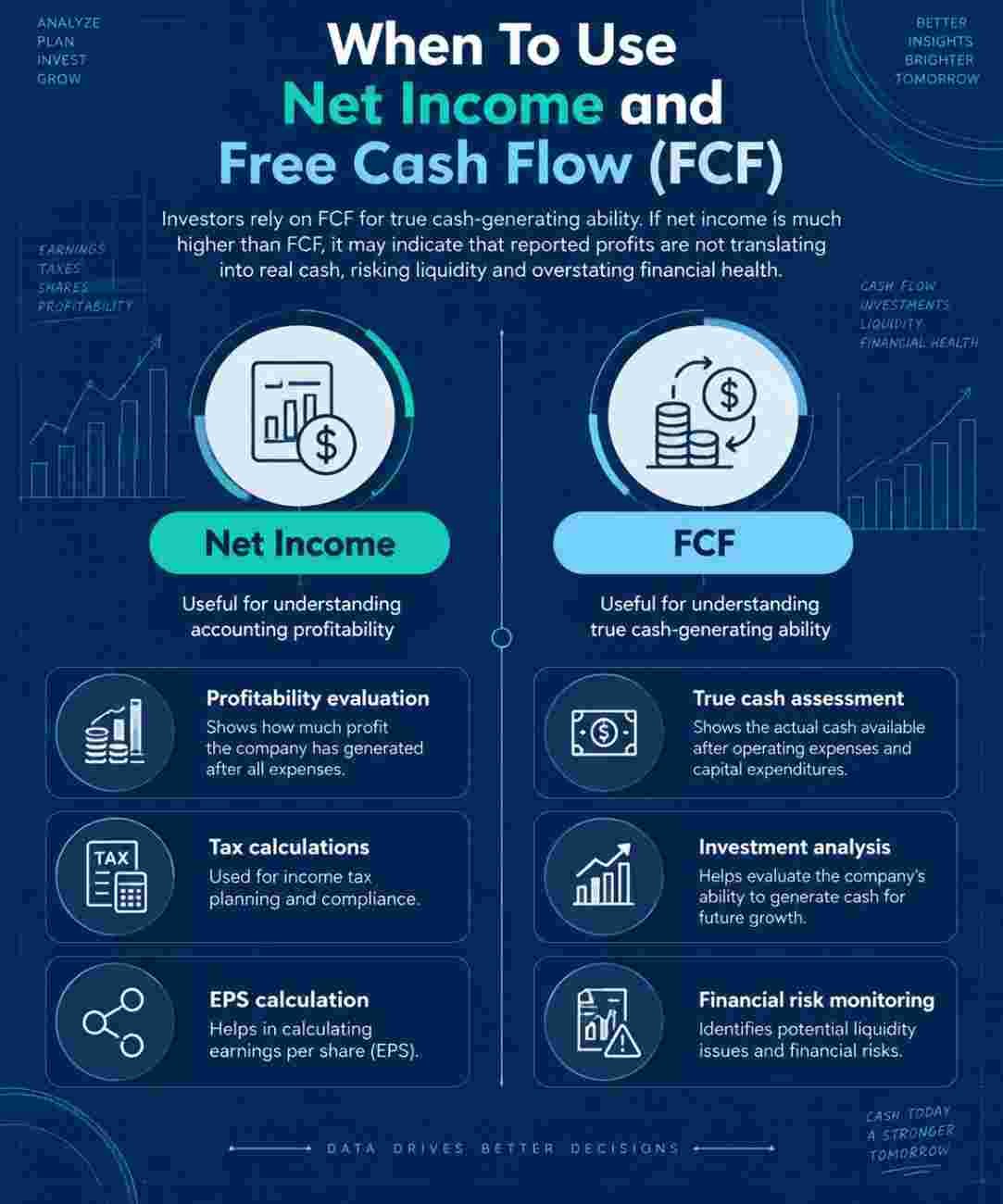
Many investors calculate free cash flow, which is operating cash flow minus capital expenditures (money spent on long-term assets). It roughly shows how much cash is left after maintaining and growing the business, and it can fund dividends, debt repayment, or new projects. Definitions vary slightly between companies, so check how a firm calculates it.
Common Mistakes to Avoid
- Confusing profit with cash. A profitable company can still be cash-poor.
- Ignoring working capital. Late payments from customers can quietly drain cash.
- Misclassifying items. Putting a loan repayment under operating activities, for example, distorts the picture.
- Looking at one period only. Trends over several periods tell you far more than a single snapshot.
Read also: Nvidia Latest News: Hugging Face Deal, Record Earnings, and What Comes Next
Frequently Asked Questions
Is a cash flow statement required?
Companies that follow major accounting standards such as US GAAP or IFRS include it in their full financial statements. Small businesses may not be legally required to prepare one, but lenders often ask for it.
How often should I prepare it?
Public companies report it quarterly and annually. Small businesses benefit from reviewing it monthly.
Can a profitable company have negative cash flow?
Yes. Fast growth, unpaid invoices, and heavy spending on inventory or equipment can all cause it.
What’s the difference between cash flow and a cash flow statement?
Cash flow is the movement of money itself. The statement is the report that summarizes it.
Final Thoughts
So, what is a cash flow statement? It’s the story of where your money came from and where it went. Profit tells you how well the business is performing on paper, but cash tells you whether it can keep operating. Learn to read all three sections together, watch the trends, and you’ll spot problems long before they become emergencies.
This article is for general education and isn’t accounting or financial advice. For your own business, consult a qualified accountant.
Business Insider Nvidia: Earnings Story in Plain English

Through his writing, Kabir focuses on delivering informative perspectives that help entrepreneurs, professionals, and business enthusiasts stay updated with important developments and make better-informed decisions.
At Business Prime Time, Kabir continues to explore emerging opportunities, industry trends, and ideas shaping the future of business.
- RoarLeveraging Business InfoGuide by RipRoar: Smart Strategies for Business - November 3, 2026
- Management Guide EWMagWork: Smart Strategies for Better Team Productivity - October 31, 2026
- Peter McMahon Net Worth: Income, Career, Business & Dana Perino’s Husband - October 30, 2026